

Key Takeaways:
AI ‘friends’ are already in your child’s pocket. Preloaded, personalised and ready to chat. For some young people, they offer comfort. For others, they may be quietly replacing the human connection that helps build and develop real emotional skills. This article looks at what the research says, what young people are actually doing, and what parents and carers can do to help.
H2 Is AI Your Child’s New Best Friend?
Mark Zuckerberg [1] has suggested that loneliness could be cured by using an ‘AI Friend’, quoting Pew research [2] on the state of Gen Z friendships. The issue he was discussing? Generation Z is apparently friendless and lonely.
The idea caught my attention. But is AI actually capable of developing emotional skills in humans?
Zuck may have confused the research around how many friendships we need and how close they should be. In the HuffPost article, he says, ‘I think it’s like 15 friends or something, right?’. He doesn’t differentiate between close friends, friends, acquaintances and family. If you don’t have 15 ‘close’ friends, don’t worry, the majority of us have maybe 3 or 4.
Why Emotional Skills Matter:
Friendship is important [3] for human physical and mental health. The ability to make and retain friends develops gradually. From the natural selfishness of the toddler, to the almost-adult awareness of the teen [4]. Emotional and social skills are taught and practised, not ‘preloaded’ or innate.
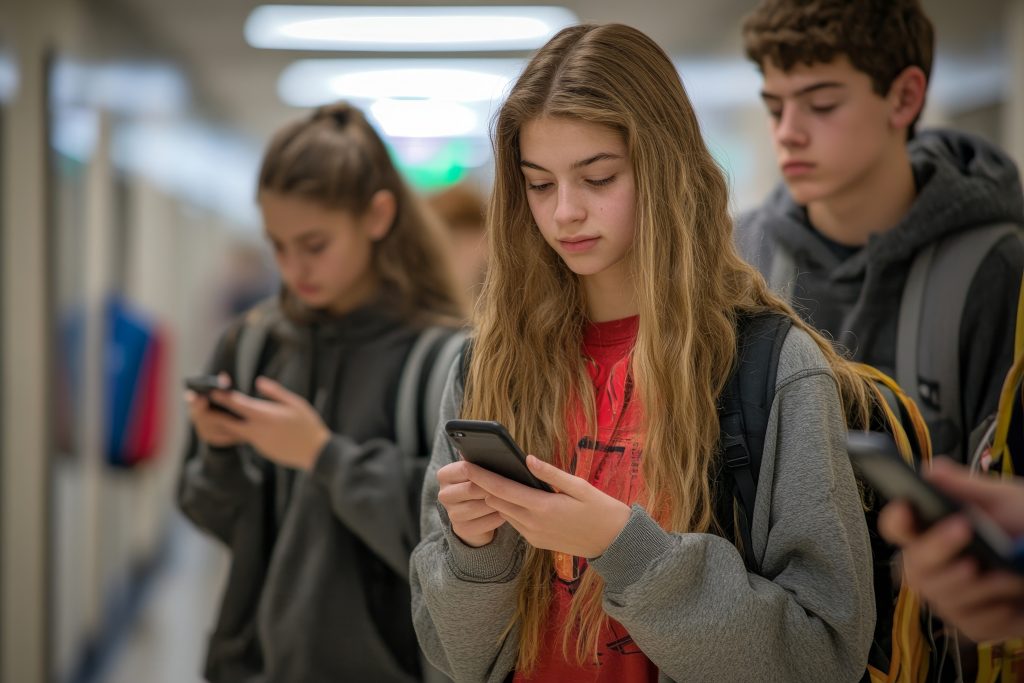
Gen Z are the anxious generation. They find making friends harder, and unlike previous generations, they are able to avoid the anxiety by living their social lives online.
What Does Real Life Actually Look Like for Gen Z Right Now?
‘Bear’, a pseudonym for a young person I know well and currently in full-time technical education, informs me that many of their course cohort (16–19, tech) use an ‘AI Friend’. They remark that users are often teens who find it difficult to talk about their emotions and that use ranges from a ‘bit of a laugh’ through to dependency. I am further told that there is a choice of ‘AI Friend’ personality, with attributes drawn from fictional or real-life characters (sports figures for example ). Who wouldn’t want Harry Potter as a mate?
It seems the use of this technology is already widespread amongst youth and children. It comes preloaded on all our devices, including smartphones. As parents and carers, we need to inform ourselves about the rise of the ‘AI Friend’. Leaving the development of our children’s emotional skills to Zuck or his Tech Bro colleagues, all with products to sell, seems a poor idea.
The Risks: What Parents Should Know
AI Friend technology is largely unregulated, poorly understood by most parents, and already in widespread use. The risks fall into two broad areas: how the data is handled, and what the closed nature of the interaction does to a young person’s development.
H3 Data, Regulation and Age Verification
One of the less-discussed risks is what I call the ‘Closed Bubble’ effect.
- Closed Bubble 1. We all benefit from having our biases challenged – it’s part of how teens learn, and how they become socially competent. There have been reports from the USA of significant impacts on those with fragile mental health who have been ‘persuaded’ by the ‘supportive’ chatbot to act violently out of their biases.
- Closed Bubble 2. A closed bubble will discourage the development of emotional skills. In the real-world, real people are often challenging (in contrast to a people-pleasing chatbot). Being an adult means learning how to get along with diverse, different and difficult opinions
Closed Bubbles are not great for human development, however comfortable they feel.
That said, an ‘AI Friend’ may have value. For those who are at a genuine risk from the health and mental harms of loneliness or family breakdown, it may offer some relief from isolation, even if it is not a substitute for human connection.
10 Practical Tips For Parents and Carers to Help Support Emotional Skill Development
Whilst the development of social skills starts from birth, it is never too late to learn. Here is what you can do:
- Family mealtimes matter. They provide a natural space to practise emotional skills. Younger children need simpler ‘rules’. Keep it light and low pressure.
- Make time for real-world experiences. Days out, family visits, playgroups and clubs (if they are available) all create discussion opportunities and provide lots of skills practice.
- Try not to react when challenged. Older kids, especially, delight in getting a rise out of you. Toddlers mirror and learn to respond in kind. Aim to model the calm you want to see.
- Let teens observe you socialising. Allowing them to be present with your friends sometimes, as observers, gives them real-life models of adult interaction.
- Short and successful beats long and miserable. When safety permits, allow teens to leave a family event if it gets too much. A brief positive experience is always better than a full-blown disaster.
- Delay smartphones. Avoid smartphones before mid-teens at the earliest, and keep children off social media for as long as possible.
- Use parental controls. This is not optional, use them!
- Understand their online world. Not all online activity is negative – find out where they are online and what the nature of the ‘chat’ is. Talk to them with genuine interest about their online activities. Gen Z lives online as well as in the real world.
- Actively encourage balance. Reward a balance between online and real-life interaction. Recruit family and friends when possible.
- Anxious or neurodiverse children may need extra support. Starting and enjoying a social group can be harder for them. Activity-based groups, built around something they love, are often the most successful entry point.

To Summarise:
An ‘AI Friend’ is no substitute for the real thing. For some, however, it is better than being isolated. And that matters too.
As the ‘responsible adult’ in your child’s life, you are doing important work: encouraging the development of emotional skills that they will use throughout their lives.There is no ‘standard’ kid or ‘standard’ timescale. Individual kids have individual timescales for success and improvement, and that is entirely normal.
Book a conversation about supporting emotional skill development in your child
If you’re worried about your child’s social development, their use of AI Friends, or their anxiety around real-life friendships, a conversation can help you think it through. It’s confidential, and the first conversation is free.
About Me
I’m Ann Todd, founder of The Performance Practice and a member of the British Psychological Society, the Association of Business Psychology and the American Psychological Association. A psychologist, coach and consultant, I work with leaders, organisations and parents navigating significant change, bringing clinical understanding and real-world experience to every conversation.
References
[1] https://www.huffingtonpost.co.uk/entry/mark-zuckerberg-on-ai-friendships_l_681a4bf3e4b0c2b15d96851d
[2] https://www.pewresearch.org/short-reads/2023/10/12/what-does-friendship-look-like-in-america/
[3] Sias, P.M., Bartoo, H. (2007). Friendship, Social Support, and Health. In: L’Abate, L. (eds) Low-Cost Approaches to Promote Physical and Mental Health. Springer, New York, NY. https://doi.org/10.1007/0-387-36899-X_23
[4] Cleary, M., Lees, D., & Sayers, J. (2018). Friendship and Mental Health. Issues in Mental Health Nursing, 39(3), 279–281. https://doi.org/10.1080/01612840.2018.1431444